Peripheral Angiography & Angioplasty
Peripheral arterial disease (PAD) develops when the arteries supplying the legs narrow due to plaque build-up, reducing blood flow to the limbs. Dr. Md. Nagib Mahfuz Khan offers diagnostic peripheral angiography and angioplasty to restore circulation and relieve leg pain.
Symptoms
- Leg or calf pain while walking that eases with rest (claudication)
- Cold feet or a change in skin colour
- Numbness or weakness in the legs
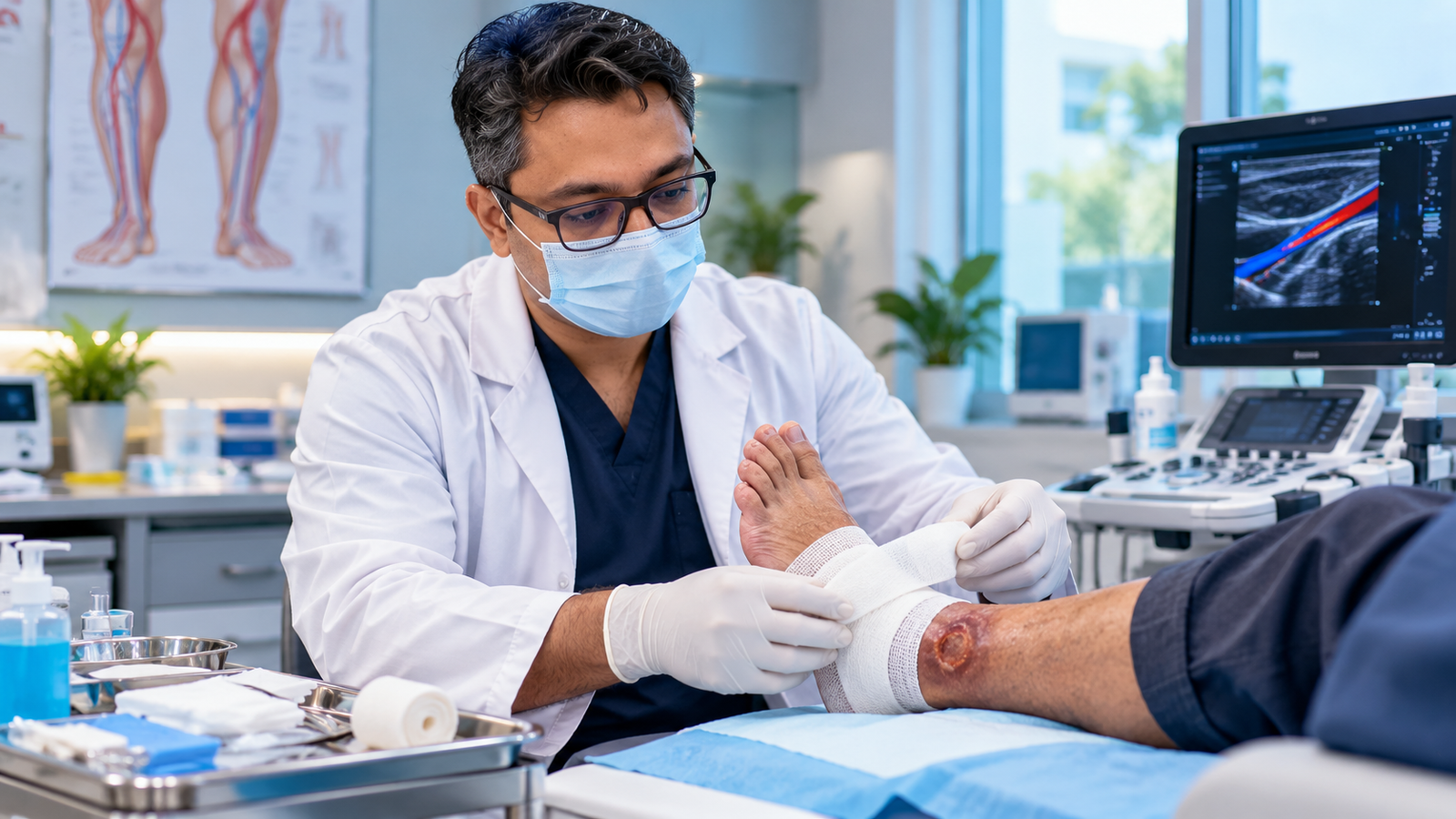
- Slow-healing wounds on the foot or toes
- Weak or absent pulses in the feet
Diagnosis
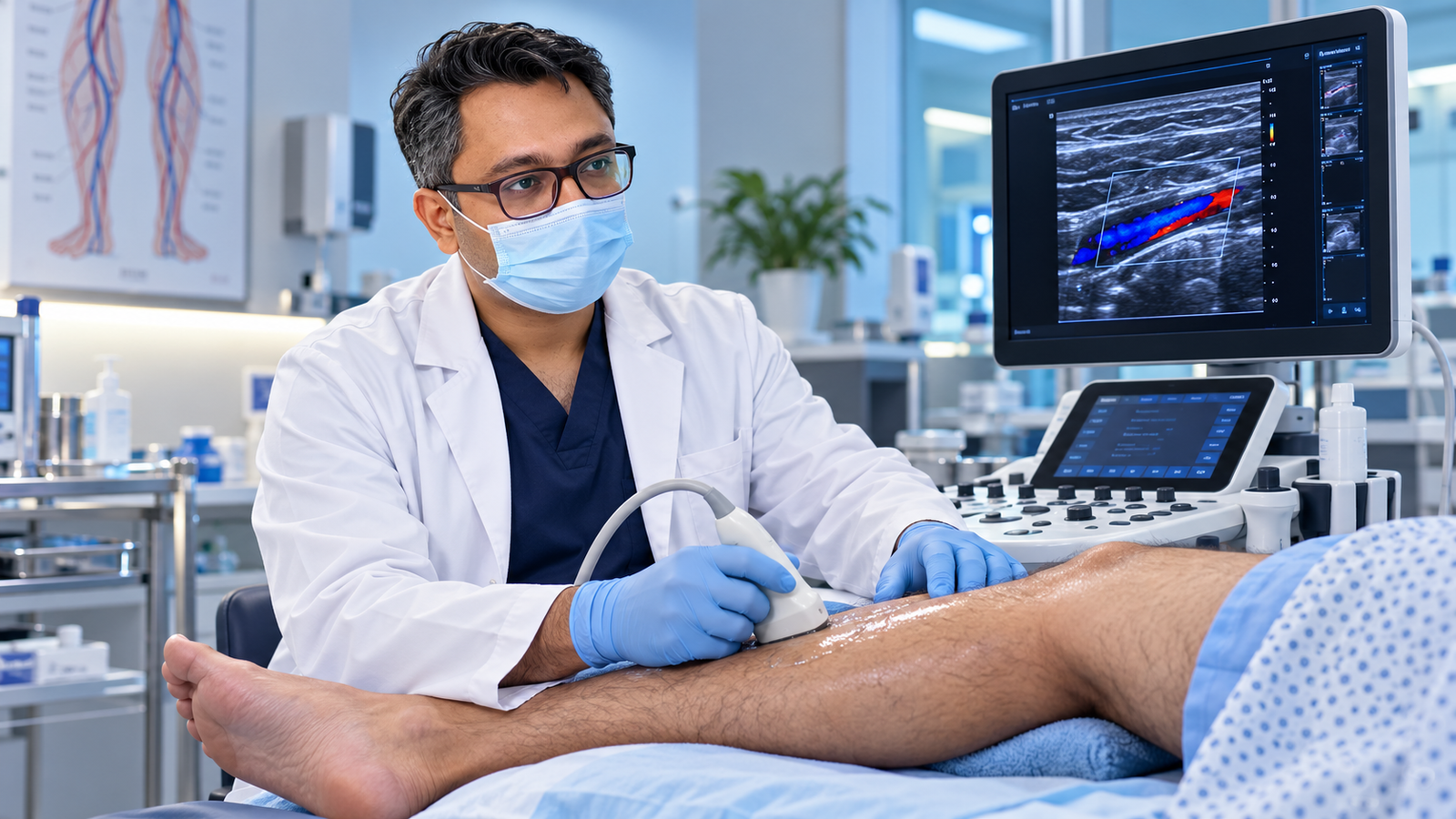
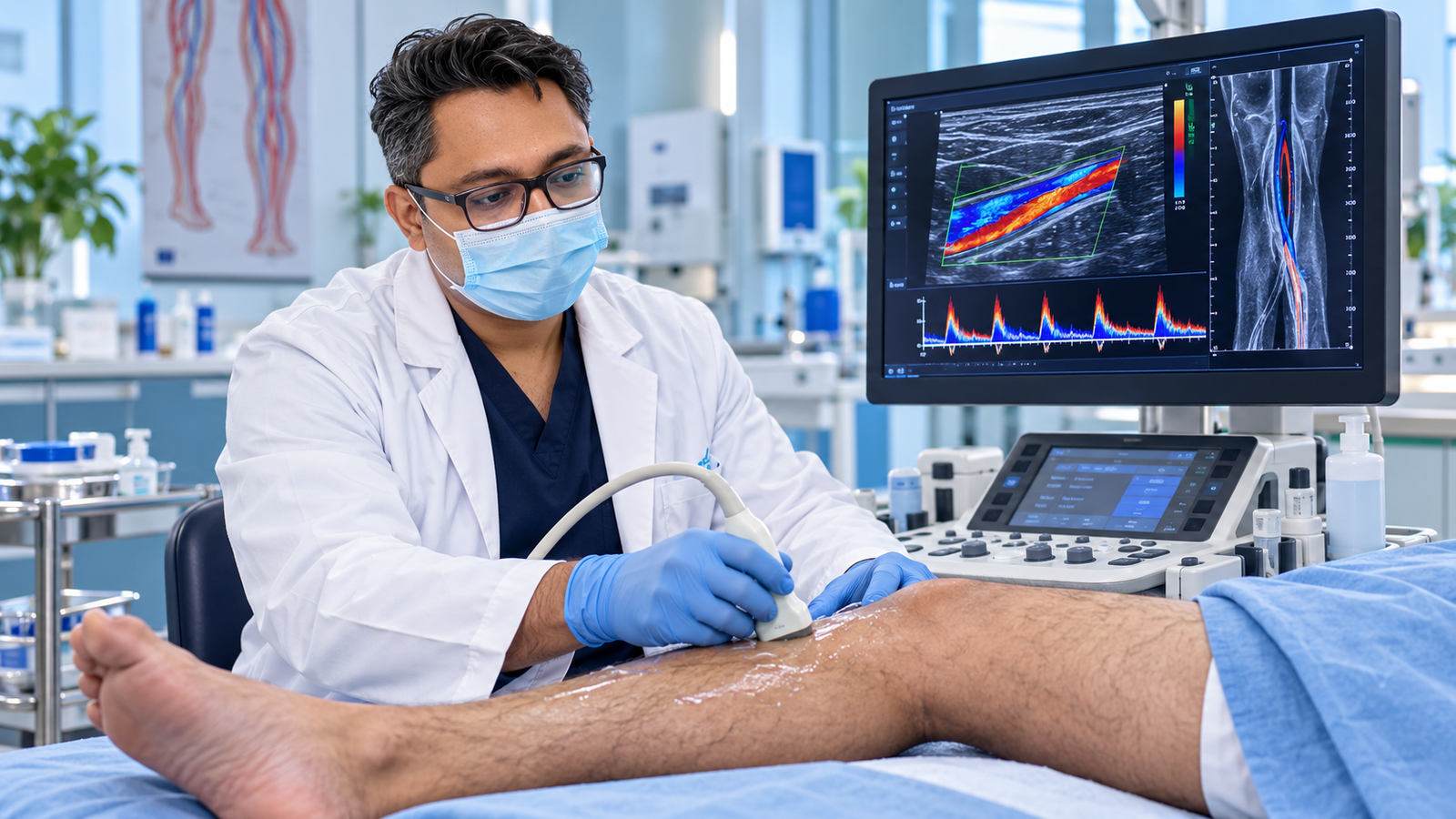
Assessment typically includes an ankle-brachial pressure index (ABPI), Doppler ultrasound, and, where needed, a catheter-based peripheral angiogram to precisely locate and grade the blockage.
Treatment Options
- Lifestyle changes and medication to improve circulation
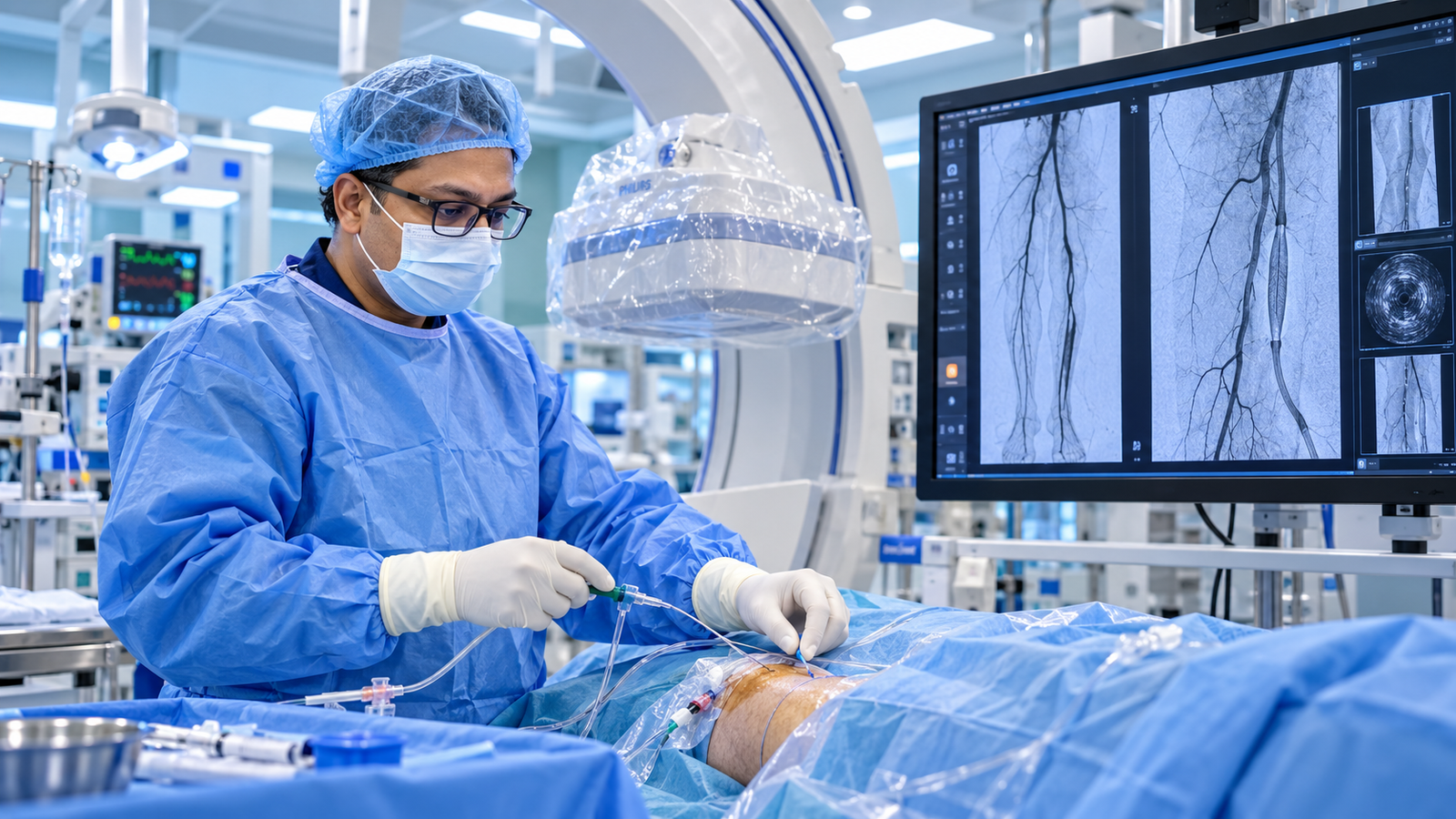
- Balloon angioplasty to reopen narrowed leg arteries
- Stenting to keep the artery open long-term
- Referral for bypass surgery in selected complex blockages
Restoring blood flow early can relieve pain, heal wounds, and prevent limb-threatening complications. Book a consultation to discuss the treatment plan best suited to your case.
Who Should Consult
- Leg pain that limits walking distance
- Non-healing wounds or ulcers on the foot
- Diabetics with cold or discoloured feet
- A known history of PAD or heart disease with new leg symptoms
Frequently Asked Questions
Is peripheral angioplasty a major operation?
No, it is a minimally invasive catheter procedure performed through a small puncture, not open surgery.
How long is recovery after angioplasty?
Most patients go home within a day and resume light activity within a few days.
Can blocked leg arteries be treated without surgery?
Many blockages can be opened with balloon angioplasty or stenting; open surgery is reserved for more complex cases.
Medical content review: Dr. Md. Nagib Mahfuz Khan, BMDC Reg. A-61144. Last updated: September 11, 2026. This information is educational and does not replace an individual medical consultation.